This is Part 1 of a 5-Part sermon series titled “Liberty and Justice for All” preached at Mt. Gilead UMC in Georgetown, KY. The whole worship service is in the link below titled “Sermon Video,” and the sermon begins at minute marker 7:45. Click here for Part 2.
The God of Liberty and Justice
- The Pledge of Allegiance ends with the familiar phrase, “with liberty and justice for all,” and today that is the mantra being shouted by so many. Many people are outraged at all that’s going on in the world today, and America—the land of the free and home of the brave, our beloved country—promises liberty and justice for all.
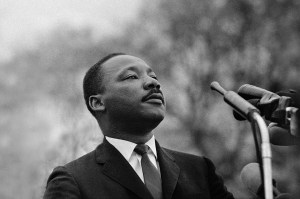 Martin Luther King Jr., in his quest for racial justice, once described the reality of that promise in his “I Have a Dream” speech as “a bad check…which has come back marked ‘insufficient funds.’” Sadly, this has been the experience of so many throughout America’s history.
- But we live in a fallen world, and even though we might have high ideals, we will almost always fall short in some way or another. That doesn’t mean that we shouldn’t seek to attain those high goals, because we should. But it does mean that we won’t always get it right.
- We haven’t always gotten it right, and today in America there are many who are working hard to make things right. The word for that in the Bible is called righteousness—to make something right, to do what is right. But what you might find even more interesting about the word righteousness is that it is the same word for justice—δικαιοσύνη. You can’t flip through many of Paul’s letters without being overwhelmed with the presence of this word on every page.
- This word and how we interpret it has challenged Bible scholars for centuries? What exactly does Paul mean by God’s righteousness or justice? Is it something applied to us, that we now have a right standing before God? Or does it mean that God transforms us to give a new hearts that actually do right things? While the answer doesn’t have to be either-or and is probably a little of both-and, we can see that it was very important to early Christian faith.
- Moreover, we can see that this term, justice or righteousness, has different meanings to different people today. Many are calling for justice to happen, for racism to end, for police brutality against people of color to end, and by God those things should end; those types of things should never have happened or even become a regular occurrence. But for some evil reason, they have become the norm for many.
- So of course, we, as Christians stand against racism and violence and all of those injustices and evil, but we don’t do so because it is the current fad or trend on Twitter or CNN or the like. We do so because of our faith in Jesus Christ. And what is more, we believe in liberty and justice for all, not because we are Americans, but because we are Christians.
- Scripture has much to say about peace, justice, liberty, and freedom. Over the next few Sundays, we will be exploring what God’s Word has to say about these things. We want to understand all of this from the vantage point of our Christian faith. God most certainly wants liberty and justice for all, and he wants it more than you and I, and he wants it more than any protestors or lobbyists want it. As we discovery the Bible’s definitions of liberty and justice, I think that we will be pleasantly surprised by what God wants and desires for all.
The Church and Racism – Neither Jew nor Greek
- Contrary to popular opinion, the Church was in fact one of the first communities to take an interest in issues such as racial, gender, and even financial equality. The early Church and the ancient world faced just as challenging racial issues as we do today. The major racial, ethnic division in the ancient world was between Jews and non-Jews or Gentiles, called Greeks in Gal 3:28 because they were Greek speakers. Yet the early Church, led by the examples of Jesus himself and then especially by the Apostle Paul, sought to bring about reconciliation and healing between these racial divides.
- As for Jesus, he often broke down racial and social barriers.
- The Samaritan Woman at the well (John 4). Samaritans and Jews were not supposed to interact with one another.
- Roman centurion (Matt 8:5-13). Jesus was sent specifically to minister to Israel and the Jews, yet he healed Gentiles brought to him as well.
- The Gospel is for the whole world (Matt 24:14; 28:18-20).
- Paul, a Hebrew of Hebrews, became the apostle to the Gentiles.
- Paul had many opponents from Judaism, and he fought hard for the truth that the Gospel of Jesus Christ was for the whole world, not just for the Jews. Moreover, he was ridiculed by some fellow Jews when he would preach that Gentiles did not have to become Jews and follow Jewish customs and laws in order for them to be Christians.
- There are several places in the NT where the early Church denounced racial and ethnic prejudices and instead urged that all races and ethnicities are one and united in Christ.
- Ephesians 2:11–3:6 – Here Paul must remind the Jewish Christians that God has brought the Gentiles into the people of God through the Gospel.
- Romans 9–11 – Here Paul must remind the Gentile Christians who were thinking that their Gentile ethnicity was superior that God hasn’t abandoned his first chosen people, the Jews.
- And so, Paul levels the playing ground in terms of ethnicity and race. In one passage, he humbles the Jewish Christians to not think too highly of themselves and their ethnicity, and in another passage, he humbles the Gentile Christians to not think too highly of themselves and their ethnicity and race. On both ends, Paul proclaims the Gospel truth that all races and ethnicities are now one in Christ.
- Revelation 7:9-17 – And we can’t forget that heavenly vision that John sees of a great, innumerable multitude of people worshipping before God’s throne who are from every nation, every tribe, every people, and every language.
- The NT Church was a racially and ethnically diverse community, not because it was politically correct to do so, but because the Gospel was for every nation, tribe, and tongue.
- And so, Paul summarizes all of this in Gal 3:28 when he declares, “There is neither Jew nor Greek, slave nor free, male nor female, for you are all one in Christ Jesus.”
Seek Ye First the Kingdom of God
- It is from this vantage point that we as Christians believe in and seek liberty and justice for all. Part of God’s righteousness and justice is viewing everyone as made in the image of God. And in Christ and Christ alone can we embrace one another, lock arms, go hand in hand, and reach across the aisle to those who outwardly, culturally, and socially might appear to be different from us. Yet in the Gospel, we are united; we are family; we are sisters and brothers; and there is no ethnic or racial high ground or superiority in God’s kingdom.
- We are commanded by our Lord in the Sermon on the Mount to seek first God’s kingdom and God’s righteousness or justice. Today and in the coming days, weeks, and months, as we seek God’s justice, righteousness, and kingdom, may he do a work in our hearts and lives where we too refuse to believe that the funds of God’s justice, goodness, and righteousness are bankrupt. May the Lord give to us more than just a dream like Rev. Martin Luther King Jr.’s. And may he give us even more than just the vision like John saw of every nation, tribe, and tongue worshipping God together. May the Lord, in the here and now, bring a piece of heaven to earth, that we may experience a taste of heaven now, that God’s kingdom would come on earth right now as it already is in heaven, and that his desire to give freedom and righteousness to and for all would come now—his freedom from sin and death and his inner righteousness in new hearts which outwardly express God’s love through our everyday acts of kindness, justice, and doing the right thing. Let us, as John said, “…not love with words or speech but with actions and in truth” (1 John 3:18). And let us do right right now, as Rev. King said, “The time is always right to do right.” Let us pray.
Prayer
- Lord, we must confess that we have not loved you with our whole heart. We have failed to be an obedient church. We have not done your will, we have broken your law, we have rebelled against your love, we have not loved our neighbors, and we have not heard the cry of the needy. Forgive us, we pray, and free us for joyful obedience. But may it not simply stop there with your forgiveness. May your forgiveness change us and mold us to be Christ to the world and one another. God, you are a just and righteous Judge who desires for wrongs to be right, not merely forgiven. So use us to be your hands and feet to do justice, love mercy, and walk humbly with you, O God. May your kingdom come here and now, and so may your desire for truth, justice, righteousness, and the freedom that only comes from knowing Christ Jesus our Lord. In His name, we pray. Amen.
 Dr. Timothy J. Christian
One comment