This is Part 4 of a 5-Part sermon series titled “Liberty and Justice for All” preached at Mt. Gilead UMC in Georgetown, KY. The whole worship service is in the link below titled “Sermon Video,” and the sermon begins at minute marker 5:47. Click here for Part 3.
Galatians 3:28; 1 Corinthians 7:17-24
Where Were You When…?
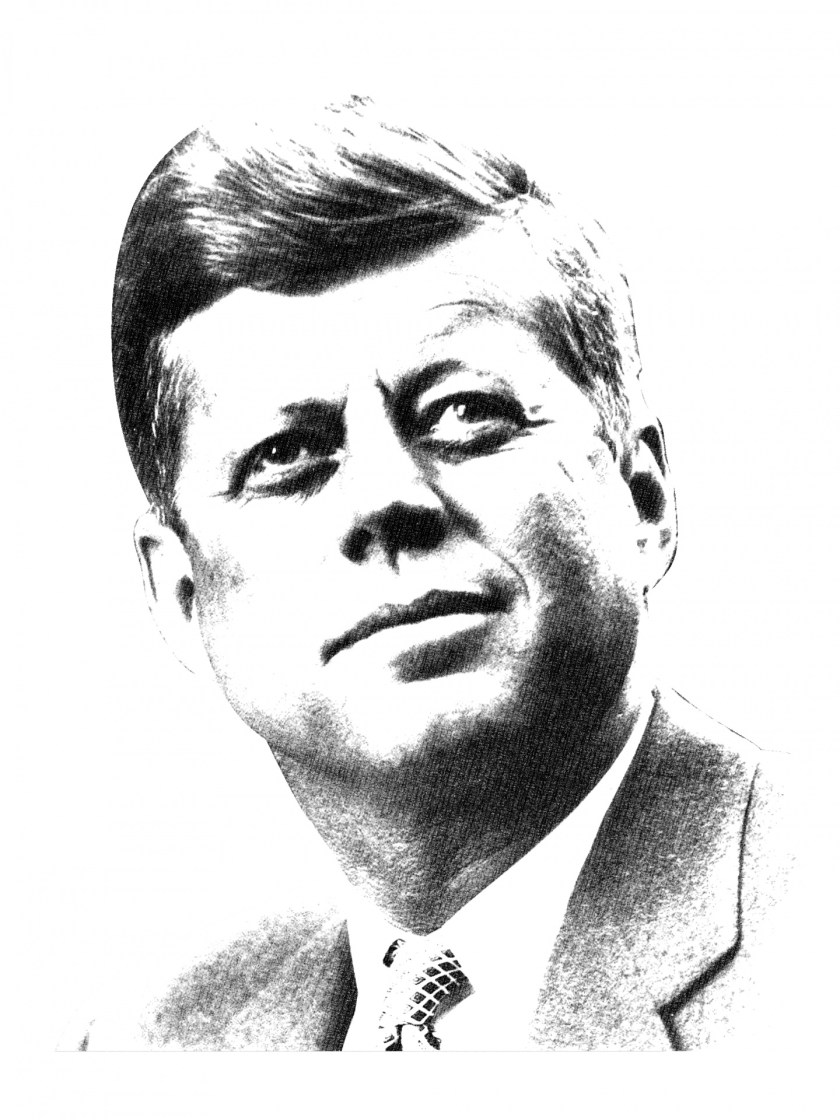
Where were you when Kennedy was shot? Where were you on 9-11? The answers to these kinds of questions are among the most memorable that we all as a country and as individuals have. Something so significant, so world changing, perhaps even earth shattering—quite literally—happens, and we never forget that moment. But there are some other moments in our lives as Christians that are even more memorable than where you were and whom you were with on 9-11 or when JFK was assassinated.
Where were you when you were called by God and encountered Christ and his love for the first time? Where were you when you became a Christian? Even if you were raised in church your whole life, when and where did you have that aha moment? Who was with you? Who were you then? Who are you now?
I tell you what, I have a lot of these God moments in my life. Of course there was when I finally gave my life to Jesus at 16. That moment has forever changed my life. And a few short months after that, I can remember the first time that I really encountered the power and presence of Christ at a youth retreat. We were all in tears in God’s presence. It was beautiful, and I didn’t want to leave that moment. And there are numerous other times where I’ve come to forks in the road where God has shown up for me and my family.
And when I look back on that first encounter, when I first met Jesus, I consider that to be the greatest and most significant moment in my life. But I was a different person then than I am now. I was just a kid, who didn’t know anything or have any influence and who was barely passing his high school classes. I would never have dreamed at that moment that I’d be where the Lord has brought me now. I would have laughed in your face if you would have told me that I was someday going to be Dr. Timothy Christian. No way. And when I finally did graduate high school, I preached at the Bachelorette Service from 1 Cor 1:26-31.
When I was called, I was not wise or influential or of noble birth or family. I was the son of a painter and State Farm secretary. I was a messed up kid searching for love in all the wrong places. I was a jerk and a fool and weak. But Paul declares that God chose such lowly people as I. He chose the weak and foolish things and people of the world over the strong, rich, and powerful. I mean, Jesus was born in a barn, man. He’s the perfect example of this
But I’m not that same person that I was. I didn’t stay there. The Lord grew me and called me elsewhere and I learned how to become wise and rich in God, though I’m still on that path every day. And I dare say that none of us, unless you are new to the faith, are still in that same situation and circumstance of life when we first heard the call of Christ in our lives, when you first met Jesus, when you first experienced his love and forgiveness.
And yet, Paul says in our passage this morning, in 1 Cor 7:20, that “Each one should remain in the situation which he was in when God called him.” I can admit this morning that I have not obeyed this Scripture passage. I haven’t kept this commandment. But I didn’t break it on purpose—I broke it because God was the one who brought me to a new life situation, many in fact since then.
But Paul here is reminding the Corinthians of when Jesus first called them. He wants them not only to reminisce, but he explains that they don’t have to become something else after becoming a Christian. Wherever you’ve been called, that’s where you should be and remain. That’s Paul’s message in 1 Cor 7. That’s what Paul says to people who are married—if you’re married, stay married. That’s what he says to people who are divorced—if you’re divorced, you don’t need to remarry. That’s what he says to the Gentile men who are uncircumcised—if you’re uncircumcised, stay that way; you don’t have to become a Jew in order to become a Christian. Now in all of this business of Paul telling everyone to stay where they’re at in life when Christ called them, he leaves one group out. In fact, he tells this one group that they should indeed change their life circumstances if they are able to. This is what Paul says to slaves in 1 Cor 7:21: “Were you a slave when you were called? Don’t let it trouble you—although if you can gain your freedom, do so.”
Within this long section of him telling everyone to stay put, it is only to the slaves that Paul urges that they not stay put. This is the clearest place in the Bible where Paul demonstrates that his is not pro-slavery.
Slavery Then and Now
You’ll remember last week that I mentioned during the Civil War era that some people misused Paul’s letters to support slavery in the American South. Well, friends, Paul was no supporter of slavery, and 1 Cor 7:21 is the proof of the pudding. Paul specifically encourages slaves to gain their freedom.
But for some naysayers, they still don’t think that Paul did enough. Why didn’t he and the early church eradicate slavery in their own day and time? Why didn’t they tell the Roman emperors that they should stop the institution of slavery? And why didn’t Paul just tell Christian slave masters to set their slaves free? And isn’t the term “Christian slave master” an oxymoron? How can any Christian be a slave master? So people think and question and accuse Paul of condoning slavery.
Well, it’s not bad to ask questions, but it is bad to ask bad questions, and these are bad questions, not because they question Paul’s motives and authority, but these are bad questions because they demonstrate no understanding of the differences between slavery in Paul’s day during the ancient Roman empire and slavery in the early Americas. People asking these sorts of questions are asking out of ignorance and simply not knowing how different slavery was in Paul’s day from slavery just 150 years about in America. Those two are very different indeed.
-
- First of all, slavery in Paul’s day had nothing to do whatsoever with race or the color of people’s skin. You couldn’t tell just by looking at someone that he or she was a slave. Most often there were no outward markers. Not so for African Americans in the South.
- Second, slaves in Paul’s day embraced and valued the culture of slavery. They too yearned to become slave owners someday if they ended up earning their freedom. They could build a fund that would eventually pay for their freedom. They could own property, and some slaves even had slaves of their own. Not so for African Americans in 18th and 19th century America.
- Third, the education of slaves in Paul’s day was highly encouraged, not least of which because many slaves did the work of business and the like. They needed an education to do their work. In fact, some slaves were more educated than their masters, “who had purchased them to carry out important functions outside and inside the home, to educate [their] children, and to add to [their] public reputation” (Green and McDonald, The World of the New Testament, 173). As such, slaves did many important jobs and had a lot of responsibility, “such as [being] managers of large farms, of households, of business enterprises and workshops, as well as physicians, accountants, personal secretaries, tutors, sea captains, and even municipal officials” (ibid.). While this was not the luck of all slaves in Paul’s day, it was for some, and slavery was a path for going up in the world economically and socially, especially if the slave’s owner was someone of great importance or of high status. Often whenever a slave’s owner was a Roman citizen and the owner set the slave free, the slave then became a full citizen of Rome with all of the rights and privileges. Not so in the American South.
- Fourth, being a slave in Paul’s day was not the lowest that you could go economically and socially. In fact, the lowest level were poverty-stricken free people who had no job security and had to work one day at a time. Some of these free people at the bottom of the food chain actually sold themselves into slavery in order to gain the bare necessities of food, water, shelter, clothing, and a steady job. Not so in the American South.
- Lastly, slavery in Paul’s day was not always lifelong, but ended for many before the age of 30. Not so in the American South.
And so, we see that slavery in Paul’s day was a very different beast than slavery in America. No, slavery back then wasn’t all flowers and roses, and sometimes it looked more like the horrors of American slavery. But to judge Paul and the early church as being in support of the type of slavery that African Americans were subjected to in the early Americas is completely off the mark. We see Paul in his own day making strides for social freedom—“there is neither slave nor free,” he says (Gal 3:28). And, “…if you can gain your freedom, do so” (1 Cor 7:21).
Slaves of Christ, Slaves of One Another
So what? Why does it matter? What use is all of this for us? Well, today’s culture and media throws so many accusations at us Christians. They say that we discriminate, that we hate people, that we oppress people with our beliefs, and the list goes on. But that couldn’t be further from the truth. We Christians were the first not to discriminate; the NT church believed in God’s liberty and justice for all. Our Christian teachings are the greatest and most loving of all religions in the world: “love your enemies,” “treat others how you would want them to treat you,” and “do not repay evil with evil, but repay evil with good.” We love people! And as we’ve learned the past couple weeks, we Christians do not believe in oppression, but instead are agents of liberty and freedom. In Christ, there is neither slave nor free! Slave and free are both equal in Christ’s kingdom. We do not believe in slavery and oppression. That’s why this matters. Like I said last week, we need to walk the walk, but this week we’re talking the talk. No more silence. No more simply accepting the accusation that the world throws at us. No, we more than anyone else on the face of the earth—I don’t care how woke you are—we Christians oppose racism, hate, and oppression more than you! And this comes from our faith as recorded in the Bible. Biblical faith is not and never can be a racist faith or a hateful faith or an oppressive faith. Don’t accept the lies that people say about Christians. We embrace and accept. We love and forgive. We liberate and free. All because this is who Jesus is. This is who God is. The Lord desires liberty and justice for all.
So where were you on 9-11? Where were you when Kennedy was shot? Where were you when you first became a Christian? Chances are you didn’t know then what you were signing up for: to love your enemies, to embrace all, even those who look and act differently than you, and to set the prisoner free like Jesus came to do.
JFK famously said, “Ask not what your country can do for you, but instead ask what you can do for your country.” In that same vein, last week we saw Paul instruct slaves and slave masters alike to ask not what the other can do for them, but what they can do for the other. The slave is to serve the master as if the master is Christ himself, and the master is to serve the slave as if the slave is Christ himself. This morning, I want you to ask not what others can do for you, but what you can do for others. What can you do to serve others today? Perhaps even, what can you do for someone of a different race today? What can you do for someone of a different faith or denomination today? What can you do today for someone of a different social or economic class than you? What can you do to serve others today? I don’t know what that will look like for you, but for me it looks like a lowly, nobody of a jerk teenager from Podunk, Illinois who grew up with little and now has a beautiful family to love and serve which I don’t deserve. For me, it looks like giving my kids the fatherly love and attention that I never received growing up. For me, it looks like giving to my kids what I never had, spending time with them and having lots of fun teaching them for homeschool. For me recently, it has looked like waiting on every need of my pregnant and now nursing wife. It means bringing the baby to Mom in the middle of the night and changing diapers and putting the baby down for a nap. It means cooking, cleaning, and laundry day in and day out. That’s my world. Those are the “others” whom I am surrounded by every day as Dad and husband. Mother Teresa once said something along the lines of, “if you want to change the world, go home and love your family.” That’s where it all begins, and that’s what it looks like for me. I encourage you to ask yourself and the Lord every day this week, maybe even before you get out of bed, “Lord, what can I do for others today?” Let’s pray.
Peace Prayer of St. Francis
Lord, make me an instrument of your peace
Where there is hatred, let me sow love
Where there is injury, pardon
Where there is doubt, faith
Where there is despair, hope
Where there is darkness, light
And where there is sadness, joy
O Divine Master, grant that we may
Not so much seek to be consoled as to console
To be understood, as to understand
To be loved, as to love
For it is in giving that we receive
And it’s in pardoning that we are pardoned
And it’s in dying that we are born to Eternal Life
Amen
 Dr. Timothy J. Christian
One comment